
Gloss black
You don't light an object. You light what it does with light.
Every product photographer has a material they hate. Mine became my favorite, and it took years.
Gloss black gives everything back. The whole room, the gear, the ceiling, the person holding the camera. It has no surface of its own in the sense we use the word. What you see is the environment, curved. To someone starting out it looks like a defect in the piece. It is the piece being brutally honest with you.
It was gloss black that taught me to invert the question. For a long time I thought about how to light a thing. Now I think about what that surface does with light, and the difference between those two sentences is almost the entire craft.
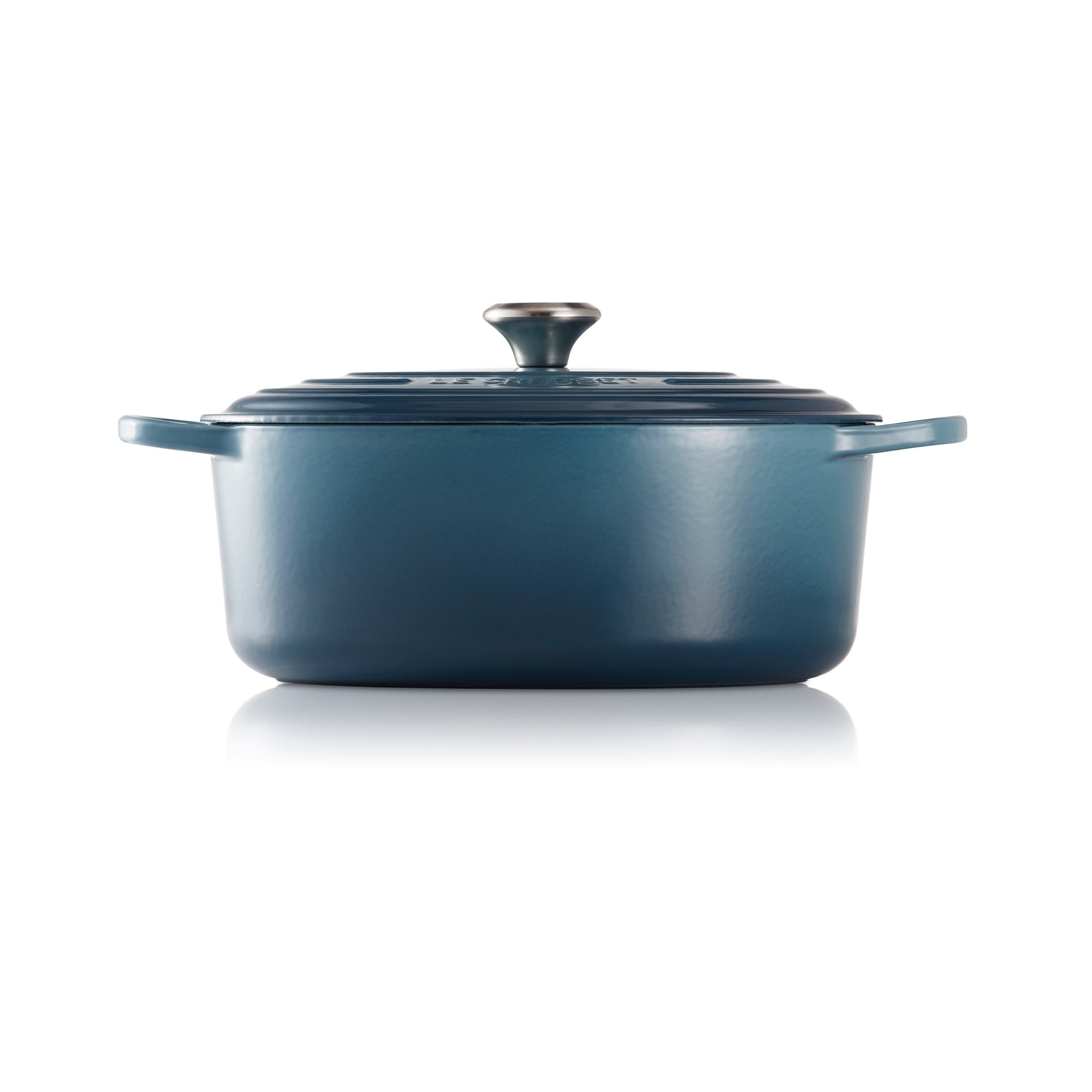
Every material has an opinion. Enamel has depth: light goes in a little, takes its time, and comes back slower and softer, carrying color from inside. Get that wrong and the piece looks like plastic, and the client will say the color came out wrong when what came out wrong was the depth. Glass wants to be crossed, not struck, and what ends up beautiful is almost never the object, it is what the light became after crossing it. Brushed metal has grain, and the grain has a preference: turning the piece changes the image more than moving the source.
None of this is procedure. It is a way of looking before switching anything on, and the result almost always depends on a decision made with the gear still off.
That is why gloss black became my favorite. It does not forgive and it does not lie. If the image came out good it is because the room was right, and I had nowhere to hide.
It is the most teacherly material there is. And on top of that it is beautiful.